Why Philadelphia Neighborhoods Feel So Different From Block to Block
Why Philadelphia Neighborhoods Feel So Different From Block to Block
One of the most interesting things about Philadelphia Living is how quickly the feel of a place can change from one block to the next. You can turn a corner and go from quiet, tree-lined Philadelphia rowhomes to a busy stretch with restaurants, a corner cafe, and a trolley stop. Architecture shifts, walkability changes, parking becomes easier or harder, and the street's energy can feel completely different even within the same zip code. For buyers, sellers, and anyone thinking about living in Philadelphia, those tiny shifts matter more than most people realize.
Why is Philadelphia a city of micro-neighborhoods?
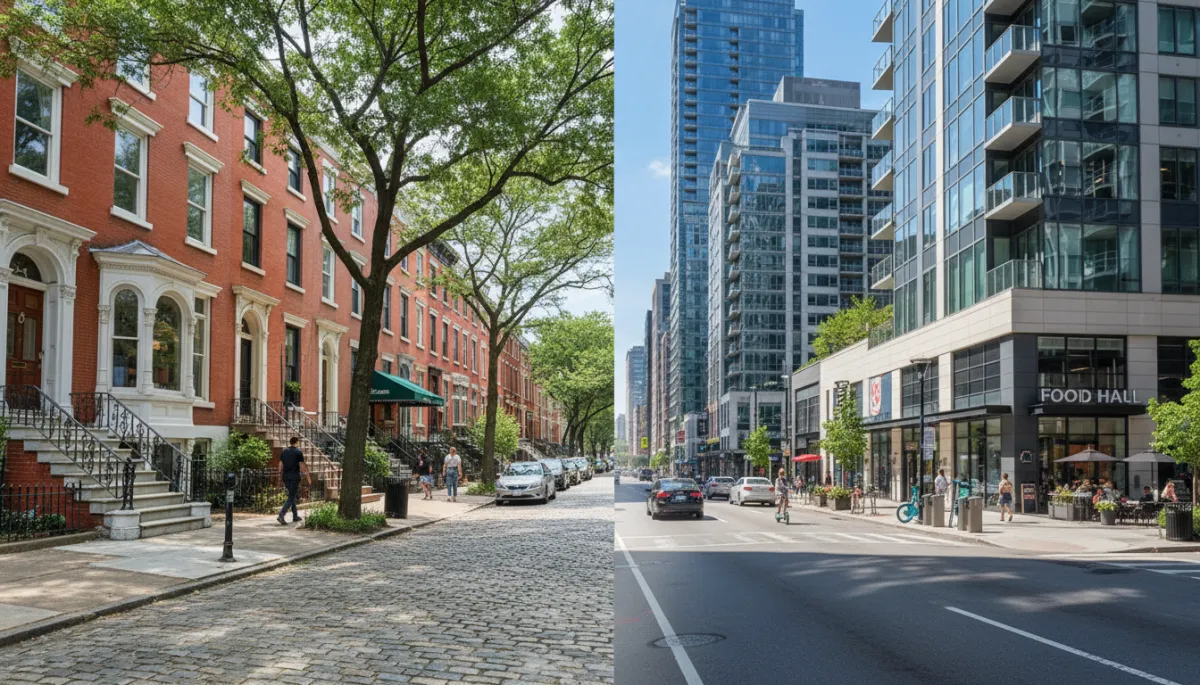
Philadelphia is not just one market, and it is not even just a collection of big, well-known neighborhoods. It is a patchwork of micro-neighborhoods that often change block by block. A single neighborhood name on a listing might cover streets that feel very different in terms of noise, traffic, local businesses, and price point. That is a big reason the Philadelphia housing market can be confusing if you are only looking at maps or national apps.
Historic development patterns created this quilt. Older trolley lines, factories that have since been converted into lofts, former industrial corridors, and longtime rowhome blocks all grew up next to one another. Over time, reinvestment, renovation, and new construction layered on top. That is why block by block, Philadelphia real estate can feel so specific. Two homes a few doors apart can attract very different buyers, support different pricing, and call for different selling strategies, even when the neighborhood name is the same on paper.
In a market that is shifting toward more balance, with modest annual price growth and more inventory than a few years ago, those micro-differences matter. Well-priced homes on high-demand blocks still move quickly, while similar homes a few streets away may sit on the market longer or require price adjustments. Understanding these nuances is where a detailed Philadelphia neighborhood guide becomes more than just a map and turns into a decision-making tool for your next move.
How can housing style change so quickly from street to street?
Walk a few blocks in many Philadelphia neighborhoods, and you will see the story of the city written in brick. Classic Philadelphia rowhomes might sit right next to twins, then give way to a newer construction condo building on the corner. Around the next bend, you may find porch-front homes with deep steps and leafy yards, or a stretch of brownstones and historic facades that feel straight out of another era. Buyers are not just comparing neighborhoods. They often compare specific streets and even specific housing styles within a few blocks of each other.
Some buyers love the narrow, efficient footprint of traditional Philadelphia rowhomes and the way they connect you closely to the street. Others may be looking for a renovated home with an open layout, central air, and modern finishes that still respect the historic shell. Newer-construction townhomes, especially those with roof decks and garages, can sit right behind or across from older brick blocks, creating very different price points within the same micro-area. Condos and brownstones add yet another layer, often appealing to people who want less maintenance and more shared amenities.
For buyers, this variety is part of the fun of buying a home in Philadelphia, but it also means that two listings with similar square footage can live very differently. For sellers, it means your direct competition is not the entire neighborhood. It is the handful of homes near you with a similar style, condition, and layout. A smart pricing and marketing plan needs to zoom in on that level, not just quote average numbers for Philadelphia real estate as a whole.
How do walkability, parking, and transit shape the feel of a block?
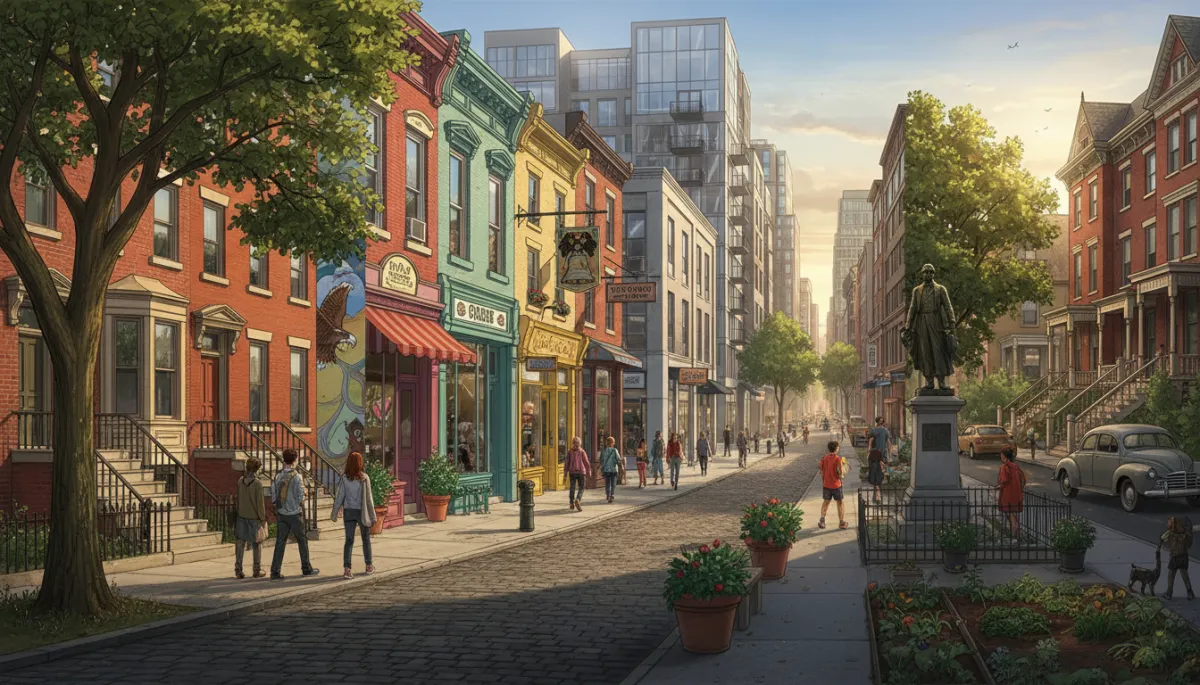
In many walkable Philadelphia neighborhoods, the daily experience comes down to how you move through your day. Are the sidewalks wide and shaded? Is there a bus stop or trolley at the end of the block? Do you usually find parking on your street, or do you circle for fifteen minutes at night? These small details can dramatically change how people feel about living on a specific block in Philadelphia, even if the homes look similar.
A block close to a regional rail station or a major bus route might appeal to commuters who value easy access to Center City or University City. A quieter block tucked away from through-traffic may be attractive to people who prioritize less noise and easier street parking. Bike lanes, crosswalks, and the presence or absence of through-trucks can all influence how a buyer ranks one side of a neighborhood over another. When you compare Philadelphia neighborhoods, it helps to think about the actual routes you will walk, bike, drive, or ride on a daily basis, not just the distance on a map.
How do parks, restaurants, and local conveniences affect lifestyle?
Lifestyle in Philadelphia is often shaped by what you can reach within a ten- to fifteen-minute walk. A block that sits a few minutes from a park, a coffee shop, and a small grocery store will feel different from a block where you need to drive for every errand. Access to parks, cafes, restaurants, trails, schools, and local businesses can change the rhythm of your day and the way you experience your neighborhood.
Some areas have a strong restaurant and cafe scene that may appeal to people who value being out and about in the evenings. Others offer easy access to river or park trails that are worth exploring if you are looking for outdoor space and recreation. A stretch of small shops and services can make a car-light lifestyle more realistic. When you look at a Philadelphia neighborhood guide, it helps to picture your actual week. Where will you grab coffee, pick up groceries, walk the dog, or meet a friend after work? That is the real test of how a block fits your version of living in Philadelphia.
Why do sellers in Philadelphia need a hyperlocal pricing strategy?
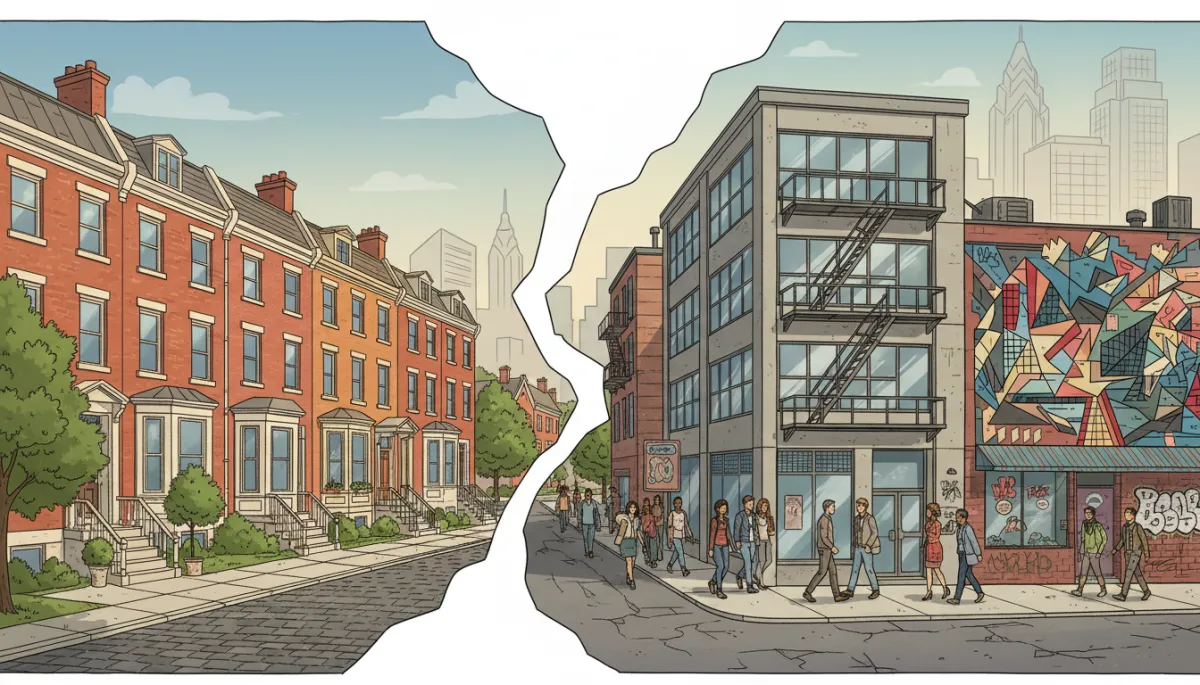
In a market where prices are rising slowly and inventory is rising relative to the last few years, sellers cannot rely solely on citywide averages or generic online estimates. Those numbers are too broad for block-by-block Philadelphia real estate. A smart pricing strategy has to consider your specific street, your exact housing style, and the features buyers value right now, such as parking, outdoor space, and recent updates.
Condition, layout, and finishes can move your price needle significantly, especially when buyers have more homes to compare. A renovated kitchen, a finished basement, central air, or a roof deck can separate your listing from older stock nearby. At the same time, a home that needs work may still attract interest if it is priced correctly and presented as an opportunity. Recent nearby sales of your exact block type are often more important than what happened several streets away. If you are thinking about selling a home in Philadelphia, it is worth getting a detailed, block-level opinion of value rather than relying on a quick online estimate. Tools like a personalized Philadelphia home value review can help you understand where your property fits in the current Philadelphia housing market.
Why should buyers explore neighborhoods at different times of day?
A neighborhood can feel one way on a quiet Tuesday afternoon, showing and very different on a Friday night when restaurants are busy or a game is letting out. Buyers who are serious about buying a home in Philadelphia often benefit from visiting areas at different times of day and on both weekdays and weekends. Morning visits can reveal commuter traffic, school drop-off patterns, and transit crowding. Evening visits show you what nightlife, noise levels, and parking look like after work. Weekend visits give you a feel for neighborhood energy, local events, and how many people are out walking or biking.
This kind of on-the-ground research pairs well with a detailed Philadelphia neighborhood guide for buyers that highlights housing options, recent sales, and lifestyle factors. It is one thing to read about a place. It is another to stand on the block and imagine your own daily routine there. That is often what helps buyers feel confident when they finally write an offer.
Which Philadelphia neighborhoods are worth comparing side by side?
Many buyers start with a short list of neighborhoods that may appeal to them and then compare those areas block by block. For example, some people look at the Fitler Square real estate and the Rittenhouse Square living at the same time. Both offer access to Center City, parks, and a walkable lifestyle, but the streets, building types, and day-to-day feel can vary widely within each area, and even from one block to the next near the squares themselves.
In the river wards, Fishtown, Philadelphia real estate, and Northern Liberties often show up on the same search list, especially for people who value restaurants, music, and creative energy. Manayunk lifestyle and nearby Roxborough Philadelphia homes are another common pairing, with hills, trails, and a mix of rowhomes, twins, and singles that can feel very different as you move from the commercial corridor to quieter residential blocks. In South Philadelphia, buyers frequently compare East Passyunk and Queen Village, both known for strong food scenes and walkable Philadelphia neighborhoods, but with different street grids, housing stock, and access to the riverfront or parks. Fairmount and the broader Art Museum area are also worth exploring together, especially for people who value proximity to the Parkway, the museums, and Fairmount Park. Graduate Hospital and Bella Vista offer yet another set of neighboring areas where rowhomes, small-scale retail, and access to Center City blend in slightly different ways depending on the block.
If you want to compare Philadelphia neighborhoods and communities in more detail, it helps to look at both the data and the street-level experience. That way, you see not just price ranges, but also how each block might support your version of living in Philadelphia over the next few years.
How does SmartytheRealtor help you read the market block by block?
As a local Philadelphia Region Lifestyle and Real Estate Expert, SmartytheRealtor combines real on-the-ground experience with smart data tools to help clients see the difference between two streets that might look similar online. That means walking blocks with you, talking through how you actually live, and layering that with recent sales, pricing trends, and inventory in your specific micro-area. It is a practical way to navigate Philadelphia neighborhoods when the market is shifting and buyers and sellers both need clear information.
For sellers, that block-level insight powers a hyperlocal strategy. Together, you can review nearby sales, your home’s condition, and current buyer demand to decide whether to list as-is, explore a Fix It and List It approach or Cash Offers+ option, consider a Trade-In move, or even a Sell and Stay solution if you want more flexibility. A List with a Twist strategy can also help tailor marketing to highlight unique features of your block, such as parking, outdoor space, or proximity to parks and transit. The goal is to position your home correctly within the Philadelphia housing market as it exists today, not two years ago.
For buyers, an A.I. Certified Agent™ can help you interpret not just listings, but also patterns. That might mean spotting a block that is quietly gaining momentum, recognizing when a home is priced above recent nearby sales, or flagging a street that aligns with your priorities for walkability, transit, or quiet. Resources like the SmartytheRealtor neighborhood guide and comparison tools can help you narrow your options before you even step into a showing. When it is time to write an offer, you will understand how your chosen block fits into the larger story of Philadelphia real estate.
Frequently asked questions about block-by-block differences in Philadelphia
Why do Philadelphia neighborhoods feel different from block to block?
Philadelphia grew in layers, with different eras of construction, transit lines, and local businesses all overlapping. That history created a city of micro-neighborhoods where architecture, traffic patterns, walkability, and local amenities can change quickly from one street to another. As a result, buyers and sellers often need to look beyond the broad neighborhood name and focus on the specific block when making decisions about pricing, lifestyle, and long-term plans.
Should buyers visit a neighborhood at different times of day?
Yes, visiting at different times of day can give you a much clearer sense of what living on that block in Philadelphia will feel like. Morning, afternoon, and evening visits can reveal changes in traffic, parking, noise, and street activity. Weekday and weekend visits help you see how busy local restaurants and parks get, and how easy it is to run errands. It is a simple way to make sure a block fits your daily routine before you commit to buying a home in Philadelphia.
How does block-by-block pricing affect sellers in Philadelphia?
Block-level differences mean that two similar homes in the same neighborhood can have different price expectations and timelines. Factors like parking, outdoor space, updates, and proximity to transit or parks can all influence value. In a market where buyers have more options than a few years ago, sellers who price based on accurate, hyperlocal data are more likely to attract strong interest early. Working with a local expert to analyze recent nearby sales and current competition is essential for anyone selling a home in Philadelphia today.
Are online home value estimates accurate in Philadelphia?
Online estimates can provide a general range, but they often struggle with Philadelphia's micro-neighborhood nature. Algorithms may not fully account for specific block features, recent renovations, or subtle differences in location. They also tend to lag behind fast-changing local trends. A customized home value review from a local expert who knows the area and has walked your block will usually give you a more accurate picture of current market value.
What should sellers highlight about their specific Philadelphia block?
Sellers can highlight practical details that buyers may appreciate, such as typical parking availability, proximity to parks or trails, nearby grocery options, transit access, and any block features that contribute to daily convenience. If the street has mature trees, a strong sense of upkeep, or easy access to a popular commercial corridor, those are worth mentioning in your marketing. A thoughtful description of your block helps buyers picture their own routine and can set your listing apart in the broader Philadelphia real estate landscape.
Can SmartytheRealtor help me compare Philadelphia neighborhoods?
Yes. SmartytheRealtor offers insights and tools designed to help you compare Philadelphia neighborhoods and housing options at a very local level. Whether you are a first-time buyer, a relocation buyer, or a longtime homeowner planning a move, you can get guidance that blends data with lived experience on the blocks you are considering. That support can make your next decision feel more confident and less overwhelming.
If you are buying or selling in Philadelphia, SmartytheRealtor, A.I. Certified Agent™, can help you look beyond the broad neighborhood name and understand the local details that may affect your next move. Connect with SmartytheRealtor at smartytherealtor.com.


